
Trade / War | ISSUE #5 / MAY 2022
- May 31, 2022
- 9 min read
Updated: Jan 31, 2023
May News Highlights

The Intersection of Trade and War
For as long as history has been written, and for as long as events have been recorded, war and trade are two components of humanity and society that have been consistently present. They both exist as fundamental elements of our world, and they both function depending on each other. Because of their heavy influence on each other, it can be thought that without trade, there would be no war, and without war, there would be no trade. While there exist circumstances where either is made possible without the other, history has shown us that some advances in trade could not have happened without the outbreak of war.
The effect that war has on trade can be both beneficial and detrimental. It can serve to encourage countries to engage in trade with each other (even if the traded goods may be used to fuel war), it acts as a motivator to push for scientific and technological advancements, and in some cases, it can help to strengthen a local economy. For example, without the occurrence of historically-altering events of World War II and the Cold War, our world today may have turned out to been very different. These pros of war, though advantageous to some, cannot in any way overcome the disadvantages that arise. War often results in the implementation of embargoes, sanctions, and shortages, which in turn, can cause the global economy to struggle, it results in millions of lives damaged and lost, and it induces a long period of reconstruction and repair.
The history and origins of trade date back to as far as the beginnings of human civilisation. From the moment social interaction began, humans traded words and stories, traded information and secrets, and later moved on to trade material and wealth. It is defined as the exchange of goods and services between one entity and another, typically in a system or a network called a market, and often uses a medium of exchange such as money.
Background of trade
Some of the earliest forms of trade could be seen in a variety of systems that followed rules different from today’s forms of trade. In the past, people would engage in a gift economy, then in a barter economy, and would eventually move on to a market economy, which is what we know it as today. The gift economy is a system of exchange where goods and services are traded with no explicit agreement or set of rules. Rather, it is more fitting to say that it has the same principles of a gifting system where there is no expectation of a gift or service of the same value in return, but there is still some expectation of reciprocity. It hence can be said that there are no rules of exchange, nor are there any economic institutions embedded in this system.
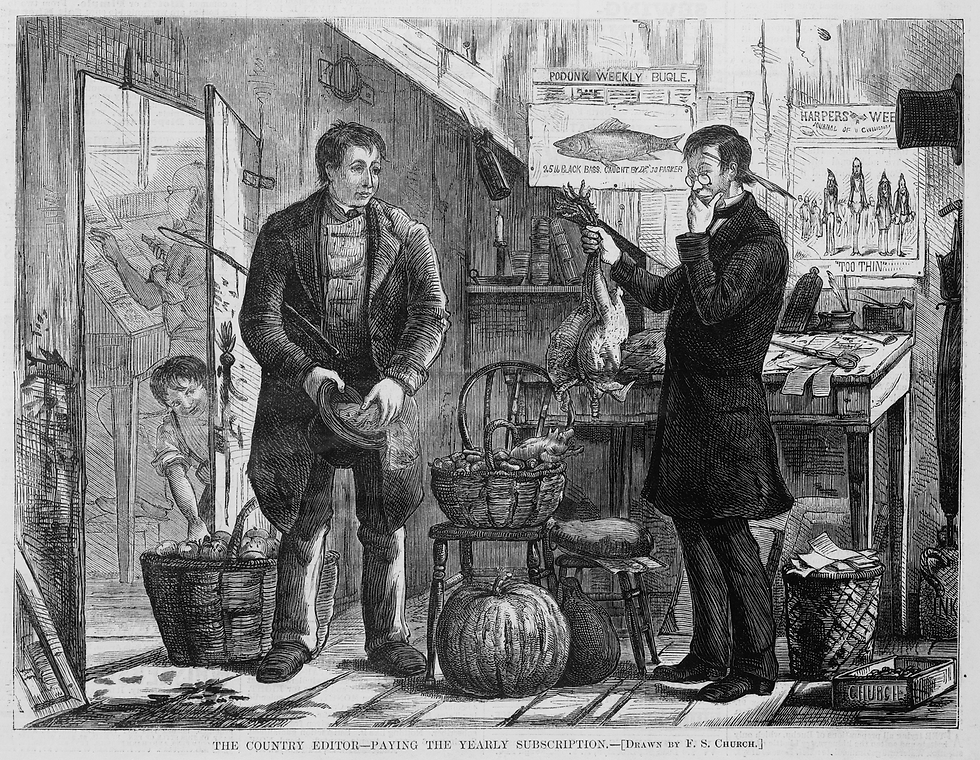
An 1874 newspaper illustration from Harper's Weekly showing a man engaging in barter by offering various farm produce in exchange for his yearly newspaper subscription.
The barter economy can be seen as a midway point between the gift economy and the market economy; items are exchanged for another item of a similar or equal value, but it does not necessarily have to be in the form of money. It is a cashless economic system, and rates are typically able to be negotiated, hence its name. It is one of the earliest forms of trade, and existed even before the use of monetary systems.
Today’s system of exchange is known as the market economy, where goods and services are traded with a medium of exchange: money. It is shaped by supply and demand, both of which direct the production and availability of goods and services. They are not controlled by a central authority, and trades are conducted on a voluntary and mutual basis. A majority of economies that exist today are market economies, and they function by allowing buyers and sellers to discuss and agree on mutually acceptable trades.
Background of War
Because war stems from conflict or some form of it, it has been around for as long as humanity has. Disagreements and contrasting opinions have always existed, and they have thus formed the basis of war - just on a larger scale. There are many reasons for the outbreak of war, but countries have conventionally gone head-to-head over reasons such as to fight for control over territories and land, to claim ownership over materials and resources, and most often, to attempt to establish dominance for name, honour and pride. Other common reasons also include historical grievances, where one nation believes that they are meant to claim lost areas or people. Some famous examples include the battle for dominance over the region of Crimea between Russia and Ukraine, or a group of islands in the East China Sea (known as the Senkaku Islands in Japan, or the Diaoyu Islands in China) between Japan and China.
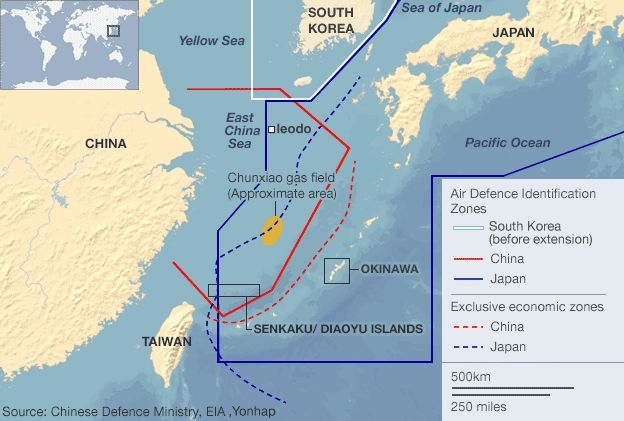
A map depicting the Senkaku/Diaoyu Islands dispute and how it soured Japanese-Chinese ties
In other circumstances, countries may choose to go to war for economic reasons - to perhaps further their businesses or increase monetary gain. They may also choose to engage in war for religious reasons, such as in the case of the Crusades (a battle for territory between Christians and Muslims) or for nationalistic reasons, such as in the case of World War I, which occured because of a mix of nationalism, militarism, the formation of alliances, and imperialism. Another popular reason for the outbreak of war includes a mix between striving for revolution and a desire to induce civil change, which can be seen in the cases of the French Revolution of the 18th Century, as well as the 2021 Myanmar Spring Revolution. There are many other reasons, some of which may lie in between larger goals or aims, but it is still understood that war often happens because those involved are seeking a desire for change. Whether it may be to attempt to reclaim lost territory, or to bring about a new system through an overhaul; it is well-known that war has a significant impact on the course of history and its outcomes. Without war, many of today’s circumstances may not even exist; if the Korean War had never occured, North and South Korea may not have become two distinct countries. But perhaps the most distinctly impactful event in history would be World War I. Without its occurence, the lives of many would be vastly different. In Germany, the circumstances causing World War II do not happen, and so Adolf Hitler, who was pursuing a future in art, would have likely remained in that field and would thus never enter politics and the war scene. In Russia, the Soviet (Czarist) regime does not completely fall apart, and therefore Vladimir Lenin would never lead the Bolshevik (October) Revolution - because it doesn’t happen.
It would be unfair to say that the advantages that resulted thanks to war have been instrumental in our lives today, but it is undeniable that the leaps and bounds made in scientific discoveries and technological advancements are far too important to dismiss. Despite the countless tragedies that our ancestors and their offspring faced, the war brought with it changes that have altered our lives today. Without the outbreak of World War I, World War II and the Cold War would never happen, and consequently, science would have developed at a much slower rate. The Cold War was especially influential in this regard, as major scientific developments were largely thanks to its outbreak; without the fight to be the first, the US and the Soviet Union would not have aspired to make such rapid technological developments. The U.S would not have placed a man on the moon so soon, the atomic bomb would have not been needed for creation, and antibiotics would have been scarcer and more difficult to obtain. Because of the nature of the Cold War, that time period witnessed a boom in the expansion of state-funded science and technology research. It affected not only the arms race and the space race but also research in agriculture, biomedicine, computer science, ecology, meteorology, and many other fields.
The advances made in technology, science and research are boundless and far too important today to do without, but we can certainly do without war and its devastating loss of life. Today, there are at least 5 ongoing conflicts, including the Myanmar insurgency (Karen and Rohingya conflicts, local protests, military coup), the Afghanistan conflict (Islamic State-Taliban, Panjshit conflict), and the Yemeni crisis (Houthi-Saudi Arabian conflict, Civil War, Al-Qaeda insurgency). However, these are often recognised to be local conflicts or civil outbreaks, and are thus not viewed as largely prominent in affecting other nations.

The Myanmar Coup
At present, there is one conflict that has taken over the front pages of the world, so much so that others have been pushed aside or largely forgotten. The 2022 Russian invasion of Ukraine is today’s worst crisis, and it is devastating to see the damage that has been done to Ukraine. The 2022 invasion alone has racked up thousands of casualties, there are more than 14 million (and counting) Ukrainians fleeing the country, and at least a third of the population is displaced. The constant shelling and invasions carried out by Russian forces have induced a nationwide crisis, and as such, it is currently Europe’s largest refugee crisis since World War II. With the way that recent events are turning out, it seems unlikely that it will stop anytime soon.
Although this recent invasion only took place in early 2022, the Russo-Ukrainian war actually began in 2014 with Russia’s annexation of Crimea. In the months of February and March 2014, the Russian Federation invaded and successfully annexed the Crimean Peninsula from Ukraine, and on March 18, the Treaty of Accession of the Republic of Crimea to Russia was signed. The annexation was an illegal move, and clearly violated the territorial integrity of Ukraine. 8 years later, the action has still not been forgotten, but it is Russia who has decided to make use of that reason as one of their motives for invading Ukraine today. Citing justifications and reasons for the invasion of Ukraine as a necessary removal of threat to Russian interests, Putin believed that the “modern, Western-leaning Ukraine was a constant threat and Russia could not feel “safe, develop, and exist”. These ‘justifications’ may sound unreasonable and do come across as a direct infringement on Ukraine interests and sovereignty, but it has stemmed from Ukraine’s recent show of interest in becoming a member of NATO.

A colour-coded map detailing territory control
Russia invaded the Donbas region by stating the necessity of reclaiming Crimea as it ‘rightfully belonged to them”. Although their primary goal was to reclaim Crimea, the Russian invasion did not stop there, and in the early months of 2022, Russian forces moved in on Ukraine. The internal effects were immediate, and despite efforts made to introduce and implement humanitarian corridors to allow for displaced persons to flee the regions of Chernihiv, Sumy, Kharkiv, Mariupol and Kyiv, there are still countless Ukrainian citizens who have now become refugees in their own country.
Because of the current situation involving sanctions and embargoes against Russia, the Russo-Ukrainian war is an apt example of how war severely impacts trade. While many other ongoing wars have a similar devastating effect on the world trade and economy systems, there are none that have effects as severe and consequential as the Russo-Ukrainian war. Both countries are recognised as key players in the world economy and in global markets due to the items they trade between each other and with the rest of the world. Fuel, energy, and food items are highly significant in propelling the world economy and trade; however, as a result of the dire situation today, both countries are unable to play their role in ensuring smooth supply lines and trade flows.
Both Russia and Ukraine’s importance and prominence in the trading world are reflected in their fuel and food exports; both nations are leading exporters of wheat, maize, barley, and sunflower oil, and Russia is a key figure in the supply of fuel and energy resources. Such resources include crude oil, refined petroleum, gas, and coal, which therefore makes the country highly responsible for the production and supply of fuel. Although it ranks third among oil producing nations after the US and Saudi Arabia, Russia is the world’s largest exporter to global markets and the second-largest crude oil exporter after Saudi Arabia. It accounts for nearly 10% of the world’s supply of oil, which thus makes its short supply a huge problem.

Russian natural-gas pipelines in northern Siberia
The effects of war on trade and on the economy on a global scale can manifest in a variety of ways; many of which are often unpredictable, unexpected, and difficult to mitigate. They can be direct or indirect, immediate or delayed, or sometimes a combination of several of these. While trade is typically one of the most affected activities, war also severely impacts the economical, social, and political scene of many countries.
It would be difficult to pinpoint exactly how war affects an economy because the consequences and possible outcomes are endless. While the direct and more obvious consequences of war on trade can be immediately seen in the form of backlogged supplies, disruptions of trade routes, and supply deficiencies, the hidden and less heard-about effects are often overlooked and forgotten. This is likely because such effects do not come as a direct consequence of the war; instead, they arise as a domino effect that stems from war itself. One such example would be in the case of the Russo-Ukrainian war. Because both countries at war are focusing all efforts and resources on fighting the war, there is little capability directed towards the production and trading of their main exports. As a result, the production levels of important goods such as grain are low, which has, at present, caused a global shortage of feed for chickens and a disrupted supply of fuel and energy. Both grain and fuel are highly essential resources, and as such, their reduced production has resulted in a worldwide food shortage.
Further Reading

Comments