
COVID-19 - The World and Us | ISSUE #2 / FEB 2022
- Feb 28, 2022
- 15 min read
Updated: Jan 31, 2023
February News Highlights
COVID-19 - The World and Us
“New normal”. “Trying times”. “Unprecedented times”. “Devastating effects”.
You’ve likely heard these terms more times than you can count; after all, mass media networks coined these phrases within weeks of the start of the pandemic to paint a picture of the sudden crisis and its impact on society. We’ve seen these terms excessively used in a wide variety of media; from TV news segments to written articles, these are the words that describe the situation that we now live in. The introduction of the virus and its consequential pandemic has impacted us in many ways and has redefined how we live. However, the perception of its impact varies from individual to individual. While many have had to suffer through numerous challenges and struggles, some have found that the pandemic allowed them the opportunity to discover themselves and new things in life. Regardless, throughout this period, we've dealt with a rollercoaster of events. The effects of COVID-19 on our lives have been shown in a wide variety of consequences; these include economic recession, high unemployment, vaccine nationalism, poor healthcare response, social damage, changes in education and working systems, and many others. We've also suffered through both the negative and positive effects of the pandemic; from devastatingly high loss of life, drastic changes in lifestyle, and severe damage to the economy, to improved technology, and changes in work/life culture, the impacts are countless. To understand it a bit better, this article intends to primarily focus on its effects on the economy, as well as its impact on social life and mental health. Today, all these changes are what define the reality we live in, and this is how COVID-19 now defines the world and us.
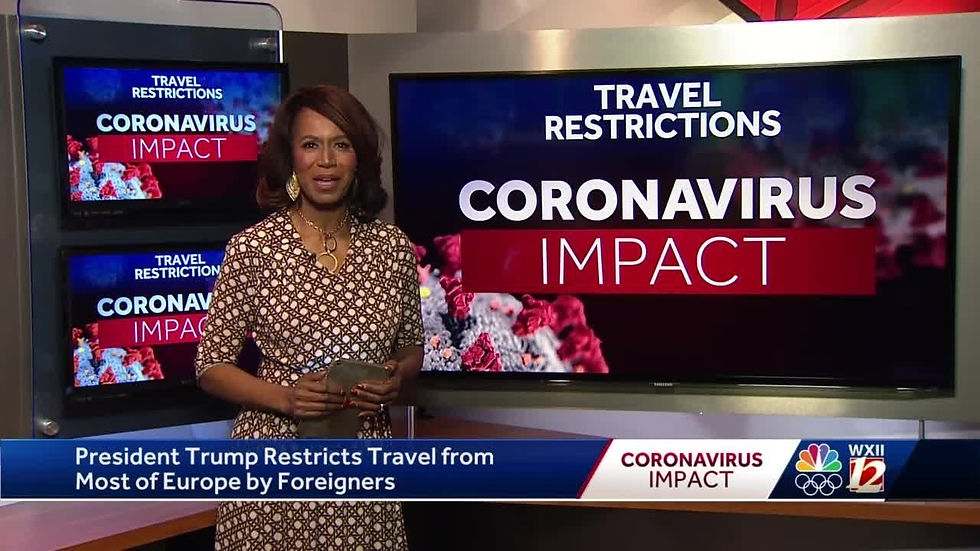
CNBC News Anchor Margaret Johnson reports on the impact of the Coronavirus
Origins of the virus
The origins of the virus can be traced to Wuhan, China, where three individuals reported symptoms of pneumonia in December 2019. The virus belongs to a family of coronaviruses, which include SARS (severe acute respiratory syndrome) and MERS (Middle East respiratory syndrome). This family of viruses causes a variety of symptoms such as loss of smell and taste, fever, cough, and respiratory distress, and can range from a severity of mild to fatal. The name ‘corona’ comes from a word meaning ‘crown’ and is so-called due to its appearance; spike proteins on the surface attach to human cells to infect the carrier. Older people and those with underlying medical problems such as cardiovascular diseases, diabetes, cancer, and immunocompromised systems are considered to be at a higher risk of getting very sick from COVID-19.

Lockdown in Wuhan, China
Within weeks of its global discovery, the virus was crudely referred to as ‘the Wuhan virus’ due to its city of origin. To combat possibility of targeted hate, in January 2020, the World Health Organisation suggested 2019 n-CoV and 2019 nCoV acute respiratory disease as interim names for the virus. The organisation chose these names in accordance with 2015 international guidelines, where rules stated against using geographical locations or groups of people in disease and virus names to prevent social stigma and discrimination. On February 11th, 2020, The World Health Organisation announced that the official name for the virus would be ‘COVID-19’. Although also referred to as SARS-CoV-2 for its relativity to the 2003 SARS outbreak, WHO clarified that while related, the two viruses were different. As such, WHO developed a name to define the new virus better. The name ‘COVID-19’ comes from a combination of different meanings, and when broken down, each component is defined as follows: CO comes from coronavirus, VI from virus, D from disease, and 19 for the year it was discovered.
By March 11, 2020, the virus had rapidly evolved for four months and had spread to countries all across the globe. Following several indicators that the infection of the virus had greatly heightened, the WHO finally declared COVID-19 to be characterised as a pandemic, thus marking the start of the world’s current largest crisis.
Initial Response
When the pandemic first hit, it took the world by storm – both in ways good and bad. On one side of the scale, businesses shut down, people lost their jobs, stock markets crashed, and economies fell into recession. On the other, technology advanced, negative effects on the environment lessened, social interactions became more accessible, and office workers found some flexibility in balancing work and personal life. The ways in which the pandemic has impacted our day-to-day activities are countless; for some, it gave the opportunity to redefine their lives and explore their freedom, but for others, it caused devastating effects on their several aspects of their life. Regardless of whether the effects have been positive or negative, the onslaught of the pandemic came about as a huge shock. The world was just not prepared for the outbreak of a virus on a scale as large as this, and many people were left to fend for themselves.





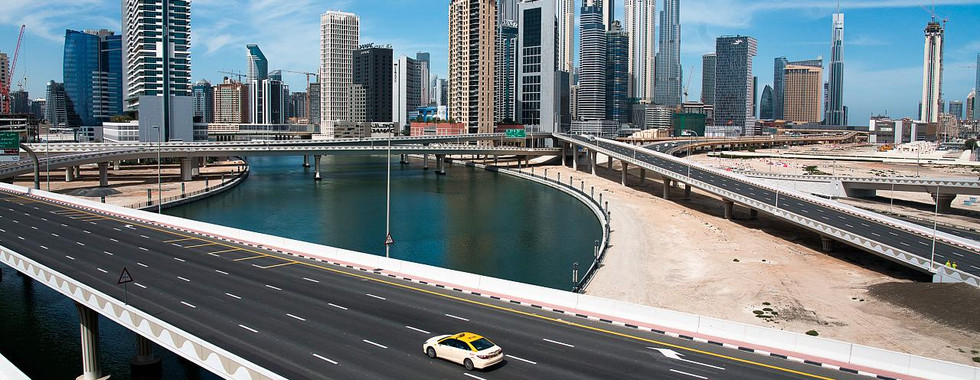

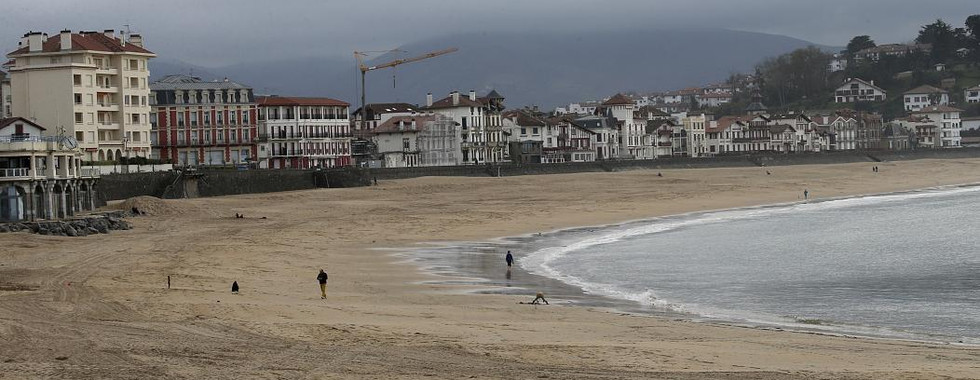
1. Empty road at the Paso Internacional Los Libertadores in the Andes, Chile | 2. Empty Plaza de Armas in La Paz, Bolivia | 3. An armored vehicle guards an intersection on Abancay avenue, Lima, Peru | 4. Empty square in a medieval old town of Dubrovnik, Croatia | 5. Aerial view of the empty financial center in Quito, Ecuador | 6. Deserted streets in a normally busy Dubai, United Arab Emirates | 7. Deserted beach in Saint Jean de Luz, southwestern France | Euro News
In this regard, there was a wide disparity of crisis preparedness between the more developed countries and less developed countries. Those in the European and North American regions had access to more advanced technology, which included real-time surveillance, developed health systems, workforce readiness, research and laboratory resources, while those in the poorer nations in Africa and Asia have been unable to access basic healthcare and preventive resources. Even today, higher income nations have (on average) vaccinated 72% of their eligible population, while in lower-income countries, just (an average of) 5.5% of the population have been inoculated. In countries where there is rampant civil unrest or conflict, poor infrastructure, or inadequate healthcare systems, citizens are unable to easily receive their dose(s). The countries of Yemen and South Sudan can fault civil war and ongoing combat as the reasons for being among the lowest vaccinated countries in the world. The map below shows which countries, as of February 2, 2022, have less than 33% of the population fully vaccinated.
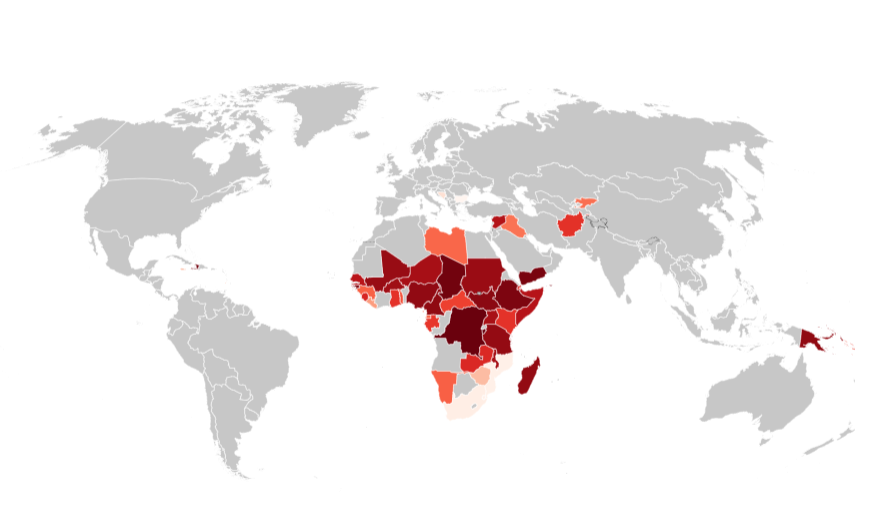
World Map of Countries with a Vaccination Rate below 33%
Investigating the Outbreak
COVID-19 has become the fifth documented pandemic since the 1918 flu outbreak but is the first to be recorded in such detail. This can be attributed to the fortune of living in a modern and technologically advanced era such as the late 21st Century, which has allowed for health experts and media groups to share information easily and readily unlike before. In countries where research and development has advanced greatly, significant monetary and medical resources could work with efficiency in understanding and combatting the onslaught of a pandemic.
As global health experts began investigating the outbreak, extensive research was conducted to understand the severity of the consequences of the virus, as well as how its symptoms would manifest. In the early stages of the pandemic when little was known, authorities took the liberty of enforcing precautionary measures to prevent further spread of the virus. All across the world, nations imposed lockdowns and various stay-at-home orders, and implemented SOPs and regulations to control public movement. These restrictions and new rules were implemented to encourage social distancing and to prevent mass crowding, which were crucial moves in curbing the spread of the virus. By April 2020, about half of the world’s population was in lockdown.

Shi Zhengli, the chief scientist for emerging disease at the Wuhan Institute of Virology
No one could have expected the drastic effect the virus could have on our daily lives, but today, COVID-19 has become the forefront of everything that we do. The start of the pandemic brought along with it a significant list of impacts on both our personal lives and on the world as a whole. Just over 2 years later, people are still finding ways to adapt and adjust to these changes. On a personal level, the pandemic has challenged our mental health, altered how we interact with people, and reshaped our day-to-day activities. On a larger and more consequential scale, it has transformed educational systems, introduced new working environments, and redefined the healthcare industry. Although many are hoping for life to resume normalcy, it’s likely that we can expect to live in this new version of reality. While some of the consequences of the pandemic might be temporary and short-lived, there are other effects that are more likely to be permanent.
Economic Effect
One of the biggest and most significant effects the pandemic has had on the world is the damage it has done to the economy. Within days of border closures and halting of international travel, supply lines were cut off, financial and stock markets suffered heavy declines, and a large portion of various sectors such as the tourism and travel industries were badly affected. The recession that the outbreak induced has been said to be the worst since the end of World War II. According to the IMF’s April 2021 World Economic Outlook Report, the economy contracted by 3.5% in 2020, and improvement is only expected to be seen several years down the line. While global economies saw some respite in the near-continuous downturn in growth in 2021, poorer and less developed nations are likely to take years to return to its pre-pandemic economic state and will likely struggle for years to come. Every country in the world has been badly affected by the pandemic. Nations all across the globe reported negative growth in their economy; however, since then, many nations have been able to bounce back and work their way back up into restoring the economy.

Under EU law, states airlines must fly 80% of their flights on a slot in order to safeguard their presence at major hubs for the next season. Regardless of capacity, an empty plane still flies
This is all highly dependent on the direction the virus takes us and the world; if COVID-19 outbreaks persist longer than expected, restrictions and policies may result in the prolonging of economic damage. Domestically, it discourages entrepreneurs and SMEs from exploring their ventures, it prevents businesses from remaining in operation, and it creates higher levels of unemployment. On an international level, the continuous implementation of restrictive laws may hinder trade and foreign investment and may result in long-term damage to the economy and society.
Policymakers and health officials must work hand-in-hand to effectively curb the spread of the virus and simultaneously manage the negative effects it can result in. As such, health experts have been steering the direction of fiscal and monetary policies and must decide whether to implement them based on short-term and long-term timeline predictions of the virus. Although each country responded to COVID-19 differently, and thus employed different approaches, most introduced support policies to stabilise financial sector resilience and promote lending. These came in the form of packages and budget allocations, where varying amounts would be provided to the most badly hit and essential sectors. These included the healthcare industry, education systems, and business models – where necessary, authorities would, as much as possible, provide support measures to cater to all involved parties.

U.S.A.: Biden's 2021 stimulus package for COVID-19
On a globally financial level, relevant ministries would relax capital and liquidity coverage requirements, allow banks to draw down capital, and encourage temporary loan repayment holidays or reduced interest rates to borrowers. The financial sector also heavily worked with various other sectors to alleviate spending and reduce losses; subsidies were provided to cover utility expenses, landlords absorbed several months of rent, and the government provided benefits to the self-employed. These were common in most countries that had the ability to do so, but individually, different countries would adapt their policies to fit with local demand.
In France, the government provided aid to the ski sector by giving Andorran workers unemployment aid, as well as rental and mortgage support to ski stations. In Antigua and Barbuda, fishermen received a 20% reduction in fuel costs. In the Republic of Guinea, an economic response plan provided assistance to the agricultural sector, exempted tourism and hotel sectors from paying utility bills, and exempted fishing equipment from import duty taxation. In Zimbabwe, a ZWL$18 billion stimulus package introduced liquidity support to agriculture, mining, tourism, SMEs, and arts, and supported a food security related program that aided vulnerable households. (More detailed reading of worldwide fiscal and monetary policies can be found here: [IMF] Policy Responses to COVID-19 (link can also be found in the Further Reading section)
The restrictions imposed upon international travel also heavily damaged supply lines all across the world. When first introduced to curb the spread of the virus, there was great difficulty in connecting international markets to the world’s factory floor – Asia. A majority of production comes from this region, but when the pandemic first hit, the world was cut off from its supply. The supply chain for healthcare products was especially badly affected; since there was a sudden demand for masks, gloves, and PPO equipment, factories had limited supply and could not initially match the demand. Although this served to benefit manufacturers later, they suffered at the start due to their incapability to cope with the sudden spike in demand. Produce lines consequentially faced greater political, economic, and competitive pressure to increase their production, which also put intense stress on forcing them to rethink manufacturing strategies.

A Malaysian worker in glove production
The effects arising as a result from the blockages of the supply chain would also manifest itself in countries who had little resources to mitigate the crisis. With little on hand, they had to scramble to secure critical medical supplies, which caused a slow start in curbing the virus. Countries that had health crisis measures in place fared better; nations like Taiwan, Singapore, and South Korea were quick to act. Through aggressive monitoring, fast implementation of lockdowns, and quick border closures, the countries were initially able to control the spread of the virus. (As with most nations currently, various factors have caused spikes in new cases and have changed policy implementations; hence, this assessment is made based on initial response.)

A sanitation team in South Korea (February 2020)
While most of the economic effects have been negative, the implementation of stay-at-home mandates resulted in a boom in several markets. Some businesses and industries rode the COVID-19 wave and was able to profit and highly benefit from the sudden demand of certain goods and services. Some goods included healthcare products, critical medical supplies, and groceries, while services included e-learning resources, delivery platforms, and entertainment services. A large number of manufacturers producing essential supplies such as gloves, masks, face shields, sanitisers, and personal protective equipment (PPE) saw their demand for their products skyrocket. Furthermore, with the constant discovery of variants and frequent fluctuations in cases, the demand would be consistent and constant. Although medical products had always been in demand, the rise of such a pandemic called attention and necessity to such products; suddenly, the medical industry had become an immensely profitable and valuable business. For example, Malaysian glove-manufacturer Top Glove Corp Berhad, recorded its best-ever quarterly net profit at RM1.29 billion in the fourth quarter ended August 31, 2020. The figure was almost 18 times as much the previous year’s RM74.17 million. The company reported that demand was especially strong in Asia, Western Europe, and Eastern Europe, and had risen by 110%, 73%, and 64% respectively compared with the 4th quarter of 2019.
Other than healthcare products, the demand for groceries rose as well. When countries shut down, and businesses closed, many people turned to cooking their own food or exploring similar options. As such, demand for raw ingredients rose, along with cooking apparatus and equipment (air fryers, pressure cookers, mini ovens, etc). In the early days of the pandemic, many people rushed to supermarkets to stockpile; however, as the lockdowns continued, physical visits slowly dwindled and were instead replaced by grocery deliveries. In the UK, supermarkets and delivery giants like Ocado and Amazon Fresh quickly became swamped with the sudden demand and were forced to place customers on waiting lists and pre-order systems. However, smaller businesses like hyperlocal and alternative food projects were able to adapt faster, and in just over two months, over 500 British veg box providers with waiting lists ranging from 160 to 6,700 customers, successfully delivered 3.5 million boxes of fresh produce – straight to the doorstep of their customers.

Abel & Cole's veg box
This transition from conventional grocery shopping to online produce purchase was the start of a long list of other industries that would soon go through the same change. Due to the nature of the pandemic, a large number of normally-physical services became adapted for online engagement. Businesses sold their products through online systems such as Shopee (Asia) and Amazon, people took to exploring food delivery services, and the world saw a boom in online entertainment.
There is an extensive list of ways in which COVID-19 has significantly impacted the economy. As different sectors were affected in different ways, each industry has its own share of struggles and challenges it has been forced to face. Countries who heavily rely on tourism and travel would suffer a severe decline in GDP, and nations who highly depend on the import and export of goods would see a drop in trade and foreign involvement. These countries are more likely to struggle in the long-run and will face more challenges in economic recovery; thus, governments and relevant authorities must work efficiently in assessing the situation and readjusting policies to best aid in an economic upturn.
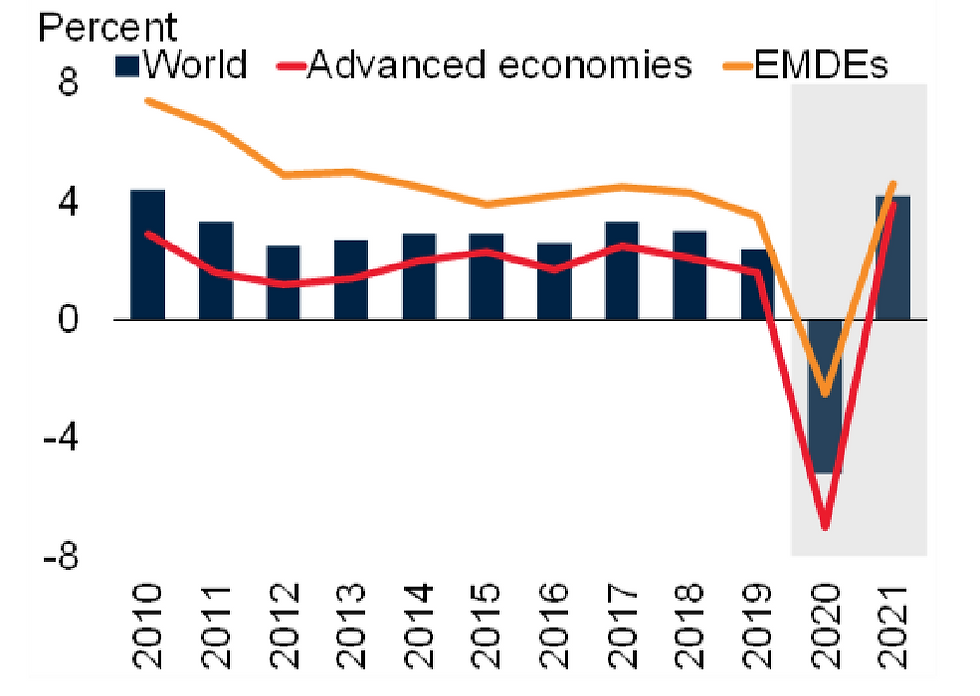
Global Economic Growth
Personal and Social Impact
Another way in which the pandemic has altered our lives is on both a personal level and on a social aspect. When the lockdowns were first introduced, it brought with it a new era of unique experiences – both positive and negative. The reception to the lifestyle change varied from individual to individual, but many experienced anxiety, depression, stress, fear, insomnia, loneliness, and hopelessness.
There are a wide range of reasons that could cause mental health difficulties during the pandemic. These could include financial insecurity, health risks, social withdrawal, and the inability to perform in classes/work, among many others. The negative consequences of the recession and economic downturn found many people unemployed and unable to find a replacement, even if they were willing to take a pay cut. As businesses struggled with keeping afloat, many had to let go of their employees, which caused many to struggle with maintaining basic survival. In best case scenarios, those affected had to cut back on expenses and be more stringent with their spending, but in worst case scenarios, people became homeless and were forced to resort to drastic solutions (such as illegal methods of earning money).
The fear of contagion also led many to develop anxiety and fear. It instilled a constant worry of contracting the virus and concerns of spreading it to loved ones, which in turn, led many to social distance in an effort to protect themselves and each other. Although preventive in spreading the virus, it encouraged many to distance themselves mentally as well – resulting in loneliness and solitude.
As a result of the social distancing measures implemented during the pandemic, many who were used to the daily motions of interacting and socialising were suddenly forced to adapt to a drastic life change. Although essential in curbing the spread of the virus, the unexpected disruption of natural social processes that we have in our society would come off as disorienting to some. With lockdown mandates in place, day-to-day interactions like shopping or in-office working, as well as social gatherings at clubs or cafes had become a thing of the past; instead, people were encouraged to practice physical isolation and separation. The stay-at-home orders encouraged a long term period of routine activity and a lack of engagement, which resulted in a cyclical mundane lifestyle. This heavily contributed to a prolonged period of stress, which would show itself through anxiety, depression, and a general feeling of helplessness and despondence, which would in turn, result in anger issues, the feeling of being trapped, and suicidal behaviour. To be left to one’s own devices with little social support is often nerve-wracking and can lead to substantial effects such as loneliness, and psychological and emotional distress. In some cases, when the intense emotions were just too much to handle, some may have even resorted to drastic measures to end their life, likely as a permanent means to a temporary problem.
Children also faced numerous difficulties in learning and societal engagement. A survey conducted on Italian and Spanish parents observing their children and young adults showed that the parents noted the increase of negative emotional and behavioural changes in their children. Children need stimulation and engagement but were not able to experience such opportunities as a result of the nature of the virus. They would hence distance themselves from society and likely grow up accustomed to the lack of interpersonal engagement and communication.

A child in quarantine
Although working from home or studying online may have seemed desirable to some, it was, at first, a troubling change. The technologically illiterate had no experience in using new work tools like online meetings and e-signing software, students had to suffer through hours of mundane, unstimulating activity: long periods of sitting in front of the screen, and those affected overall had no ability to absorb information. Many faced distractions from home; parents especially had a tough time juggling work responsibilities and caring for the kids. Students dealt with a wide variety of issues as well, the lack of physical classes forced the migration from in-person classes to online systems, and many education facilities and facilitators were unprepared for the transition. Students would often face brain fog, which brought with it an inability to focus, difficulty in concentration, and a significant lack of attention. Older teachers were unable to adapt to the change and struggled with new technology.
These transitions were tough initially, but some people eventually welcomed the changes. Many found that they had more time for personal affairs: those who worked and parented had the ability to have more time for both, and people found that they could connect and socialise with people on a wide variety of platforms, all over the world. Games like Among Us, Animal Crossing, and FIFA 21 were among the top games played during the pandemic, and people often turned to them as a substitutive means of connecting and socialising with others.
COVID-19 has changed our lives in many ways – both good and bad. It impacted the economy, our society and social life, the environment, the healthcare system, the world’s supply chain(s), businesses, the education sector, the financial sector, our mental wellbeing… the list is long and endless. We lost many lives, but we gained insight into how to be better prepared in the future. Our economy suffered badly, but we learnt how to adapt and be creative. We faced many stumbling blocks – physically and mentally – but we pushed ourselves to overcome our struggles. Although not quite the expected life-changing situation any of us would have ever expected to be in, the outcomes of COVID-19 have taught us much about gratitude, as well as many other lessons – ones that will hopefully change us for the better.

Further Reading
Comments